
How Solana Achieves Lightning-Fast Transactions
Exploring the mechanisms behind Solana's high transaction throughput and how Proof of History enables it to process over 50,000 transactions per second
Solana is one of the major blockchains that exists today, it was launched in March 2020 on the mainnet and quickly became popular because of its high transaction throughput and started being seen as the competitor of Ethereum.

Theoretically, solana can process over 65,000 TPS (transactions per second). When tested in a real-world environment with 200 nodes and GPUs, Solana sustained over 50,000 TPS. For comparison, Ethereum can only process around 15 TPS and Bitcoin can process 7 TPS.
The highly scalable architecture and high transaction throughput along with lower costs gave it an edge over its competitors.
Today we are going to focus on what actually makes transactions on Solana fast & the mechanism behind its transaction processing effeciency which makes it different from the blockchains that came before it.
What is the role of consensus in Blockchains?
All Blockchains use a consensus mechanism which is a set of rules and protocols that allows all participating nodes of the blockchain to agree on the validity of a transaction and the current state of the blockchain. Each major blockchain may have different consensus mechanism to ensure all transactions added to the blockchain are valid, authentic and have been agreed upon by the network.
To better understand how Solana works, we will take a quick overview of two major blockchains that were popular before the arrival of Solana i.e. Bitcoin and Ethereum
How does Bitcoin & Ethereum work?
Bitcoin, the first blockchain, uses Proof of Work (PoW), where miners solve complex computational puzzles to validate transactions and earn rewards. This makes the system secure but also slow (~7 TPS) and energy-intensive.
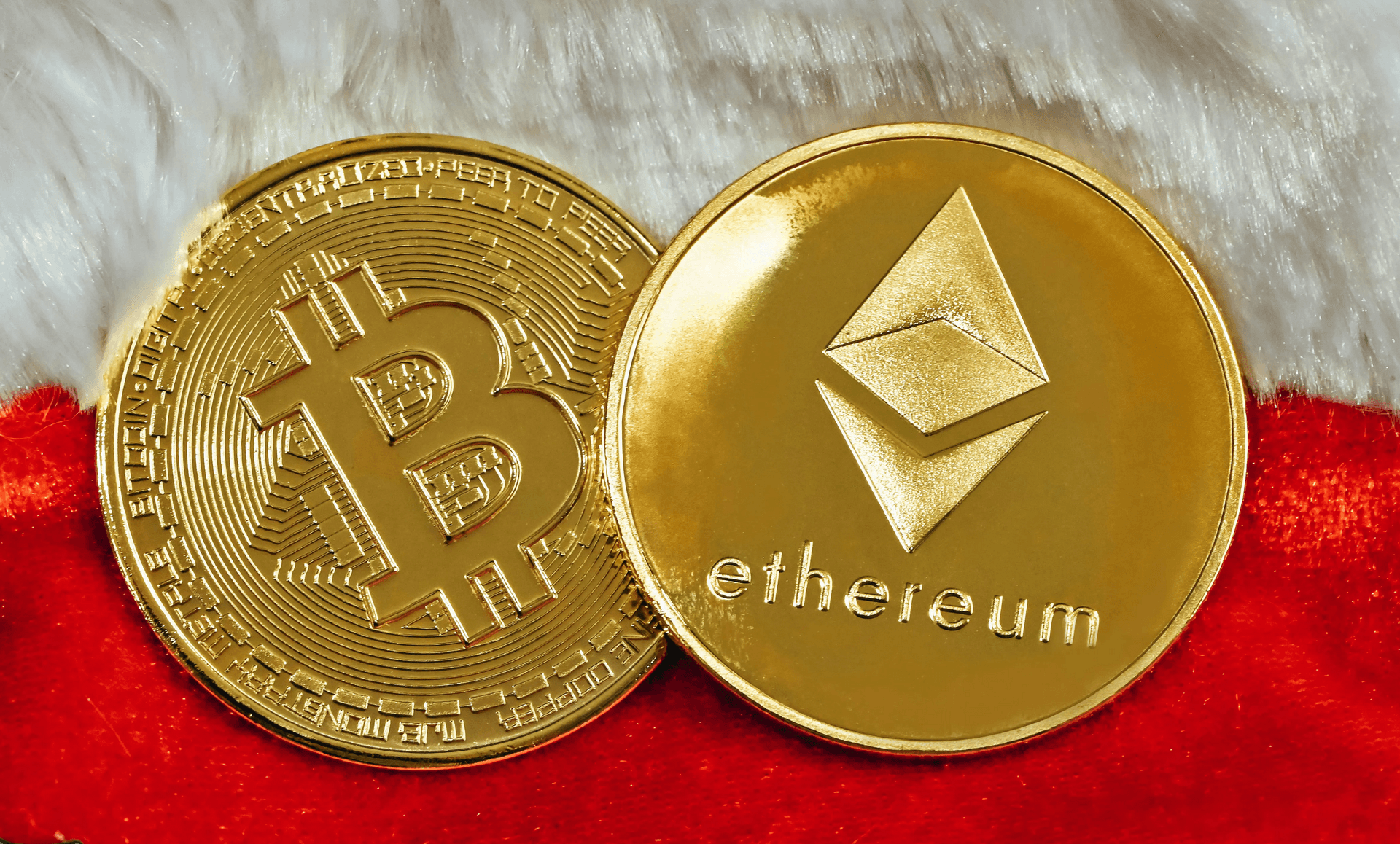
Ethereum, which originally also used PoW, transitioned to Proof of Stake (PoS) in 2022. In PoS, validators are chosen to confirm transactions based on the amount of crypto they stake, reducing energy use while maintaining security.
Now that we have a basic idea of how Bitcoin and Ethereum work, we can move to Solana.
How does Solana work?
Solana works on a hybrid mechanism of Proof of Stake (PoS) and Proof of History (PoH) to validate transactions and secure the network. The holders of Solana cryptocurrency (SOL) stake their token as collateral to become validators and participate in the consensus process.
Proof of History is the core innovation behind the success of Solana blockchain, allowing it to easily process thousands of transactions per second.
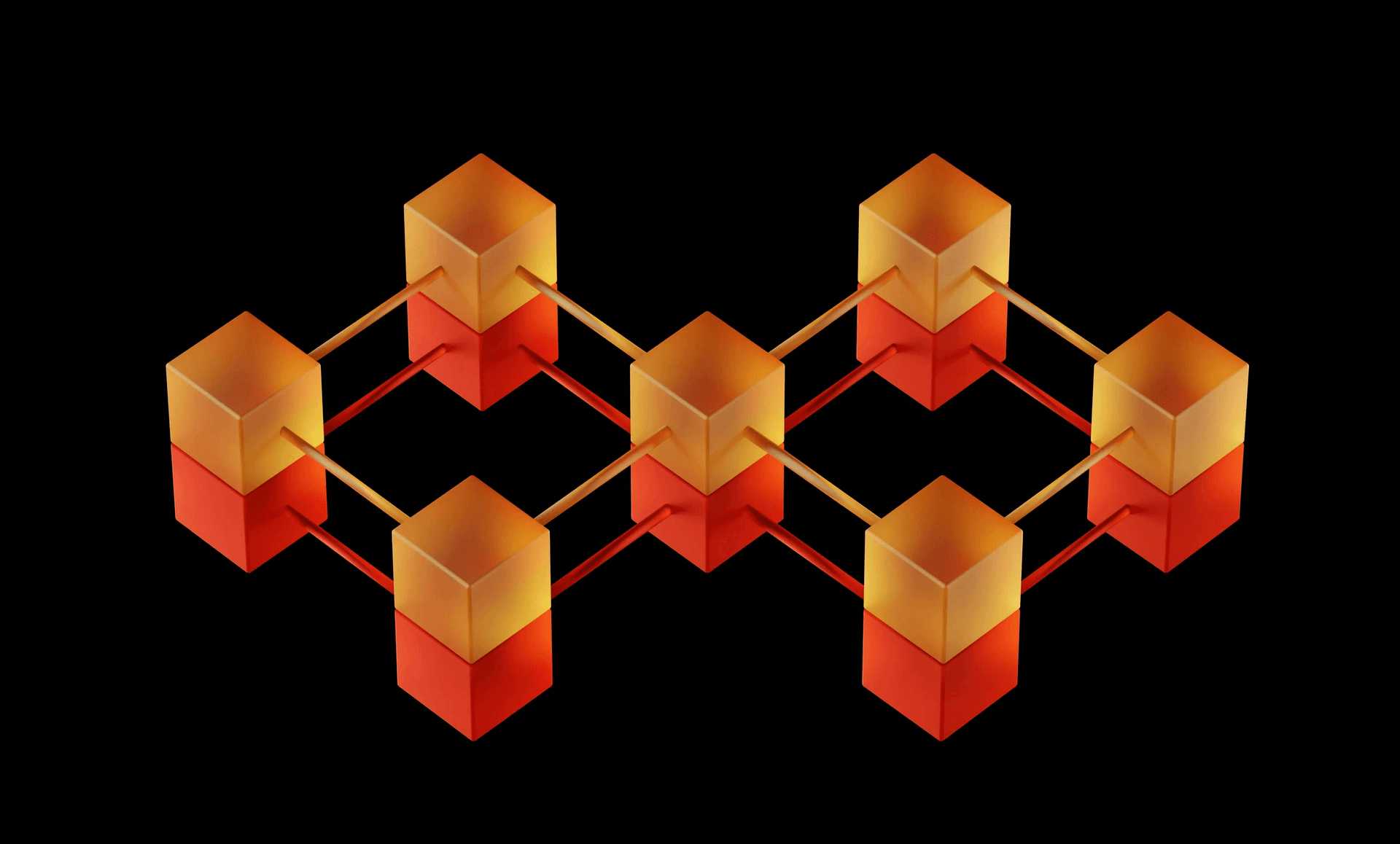
PoH acts like a cryptographic clock for the blockchain, It is a sequential hash chain where each hash is generated from the one before it, You can't skip ahead; you must compute them one by one. The output acts like a timestamp. Leader generates and streams the PoH sequence. Validators verify it, This gives the network a shared sense of time without needing to constantly message each other.
Now that we understand the working mechanism of Solana, we can dive into the crux of this article.
How does Solana process transactions & how is it so fast?
Solana's transaction processing relies on a coordinated system of leaders and validators.
Leaders and Validators
A leader is the validator responsible for producing blocks during a given time slot (~400 ms).
Leader selection happens in the following steps:
- Time is divided into epochs (~2–3 days).
- At the start of each epoch, Solana computes the leader schedule for the entire epoch.
- This schedule is deterministic (anyone can calculate it from the current stake distribution).
- Solana uses Proof of Stake to decide how often a validator becomes leader.
- The more SOL you stake with a validator, the more slots that validator gets in the schedule.

Example:
- Validator A has 20% of all staked SOL → ~20% of leader slots in the epoch.
- Validator B has 5% of all staked SOL → ~5% of slots.
This makes the system both fair and secure, large stakes earn more leadership opportunities, but every validator with stake has some chance.
How does leader schedule help in faster transaction processing?
Everyone in the network knows the leader schedule ahead of time. This prevents confusion or competition (unlike Bitcoin mining). It allows the client to send transactions directly to the upcoming leader and validators prepare for their slot.
So whenever a client sends a transaction, it directly reaches the leader for that particular time slot as per the predefined leader schedule.
Lifecycle of a transaction
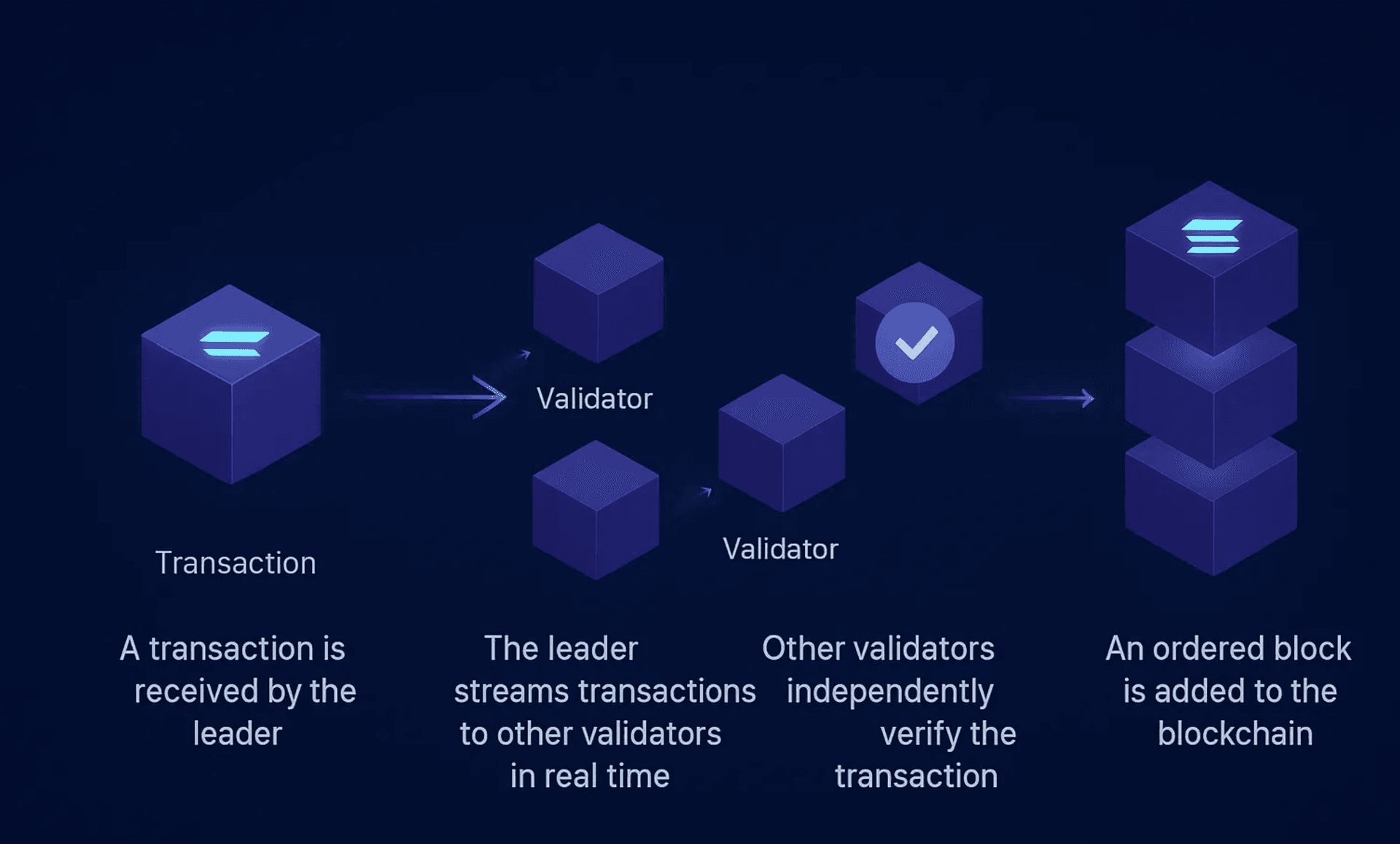
When a transaction is received by the leader, it's job is to order them by inserting them into the PoH sequence as they arrive and stream the transactions in real-time to other validators, this is very important because this allows the validators to validate the transactions as they are taking place in real time instead of waiting for a whole block to fill.
Other validators verify the transaction independently by checking if leader's claimed ordering matches their own PoH tally. They also check the digital signatures (to prove if the client actually signed the transaction) and account balances, program's states are also checked.
If a transaction is invalid (e.g., Client has no SOL), it's discarded.
At the end of a leader's slot, the ordered transaction along with PoH hashes are bundled as a block.
The next leader continues the chain using their slot's PoH sequence, This creates a continuous, ordered blockchain with no ambiguity in timing.
Why is this mechanism good?
Solana's design combines Proof of History with a deterministic leader schedule. Because everyone knows in advance which validator will act as leader, transactions can be sent directly to the right node without competition. PoH then allows these transactions to be streamed continuously rather than batched, enabling throughput of up to 50k+ TPS. Validators don't waste time debating the order of transactions, which keeps latency low. And if a leader attempts to cheat, such as reordering transactions, PoH makes the manipulation easy for other validators to detect.
Summary
Solana achieves high throughput by combining Proof of Stake with its unique Proof of History clock and a deterministic leader schedule. This setup allows leaders to be pre-assigned, transactions to be streamed in real time, and validators to quickly verify their order without wasting time on coordination. As a result, Solana can process thousands of transactions per second with low latency. Despite challenges such as high hardware requirements and occasional network instability, its architecture continues to set new standards for blockchain scalability.